MELLISSA EDNEY


Teaching Children to Read the Time: A Fun Guide for Parents
Ever wondered how to make learning to read the clock a fun and engaging activity for your child?
Teaching children to read the time is an essential milestone, helping them develop independence, structure their day, and build foundational math skills. However, for some children, especially those who face learning challenges such as dyslexia, reading the clock can be particularly difficult.
This guide offers parents practical steps to help their children learn to tell the time and introduces an effective learning tool: flashcards designed to make time-telling a breeze
Why Teaching Time Can Be Challenging
Reading the time isn’t just about recognizing numbers—it involves understanding how numbers relate to the passing of time, interpreting the positions of the clock hands, and connecting these visuals with everyday routines.
Dyslexic children, in particular, may find distinguishing between similar-looking numbers (e.g., 6 and 9) difficult, struggle with sequential tasks, or face processing delays that make it harder to interpret visual information quickly.
This can make learning to tell the time a frustrating experience for both children and parents.
Personally, the thing that I struggled the most with teaching my dyslexic son is reading the time in an analogue format, when everything is digital in his life around him. Thankfully, we managed to find a watch that had both an analogue dial and digital face, however this is not always easily accessible to everyone.
A Simple, Fun Activity for Teaching Time
To make time learning engaging and effective, try the following step-by-step activity:
A paper clock with movable hands (you can make one at home, or use the free download below)
A timer
Your child’s favorite toy to create time-bound tasks
Instructions
Start by introducing the concept of the hour and minute hands using fun stories, such as, “The little hand tells us what hour the day is having; the big hand shows how fast time runs!” This helps create a narrative that makes learning relatable.
Practice setting the paper clock to different times and saying them out loud together. Be patient and take breaks to avoid overwhelming your child, especially if they find learning challenging.
Turn this practice into a game: call out a specific time and have your child move the hands on the clock to match. For dyslexic children, you can add tactile prompts or use different colors to differentiate the clock hands for easier recognition.
Incorporate real-life practice by setting a timer for simple tasks, such as, “Can you pick up your toys in 2 minutes?” and show how that duration looks on the clock.
The Power of Flashcards in Learning
Flashcards are a proven educational tool that engages children in active learning. By combining visual cues with hands-on interaction, flashcards can support memory retention and make complex concepts easier to grasp. When it comes to teaching time, flashcards can bridge the gap between theory and practice, giving children a simple, repeatable method to associate clock visuals with their corresponding times.
Why Flashcards Work for Young Learners
Visual Reinforcement: Flashcards provide clear, easy-to-understand visuals that help children process information quickly.
Interactive Learning: The hands-on nature of flashcards invites children to participate actively, making learning enjoyable.
Repetition and Engagement: Regular use of flashcards reinforces learning through repeated exposure, helping children, including those with learning challenges like dyslexia, build confidence in their skills.
How to Use Time-Telling Flashcards Effectively
Make It a Game: Create a “Time Challenge” where your child matches the time on a flashcard with the time on a toy clock.
Integrate Daily Routines: Use flashcards to signal daily activities. For example, “Can you find the card that matches 7:00 when we have breakfast?”
Adapt for Learning Needs: For children who find learning difficult, use color-coded cards or tactile cues to differentiate the hour and minute hands.
Introducing Elly and Friends Time Learning Flashcards
For parents looking for ready-made, engaging resources to help their children master reading the clock, my Elly and Friends learning time printable flashcards are a perfect solution.
These cards were thoughtfully designed with young learners in mind to support a smooth learning experience.
Key Features of Elly and Friends Flashcards:
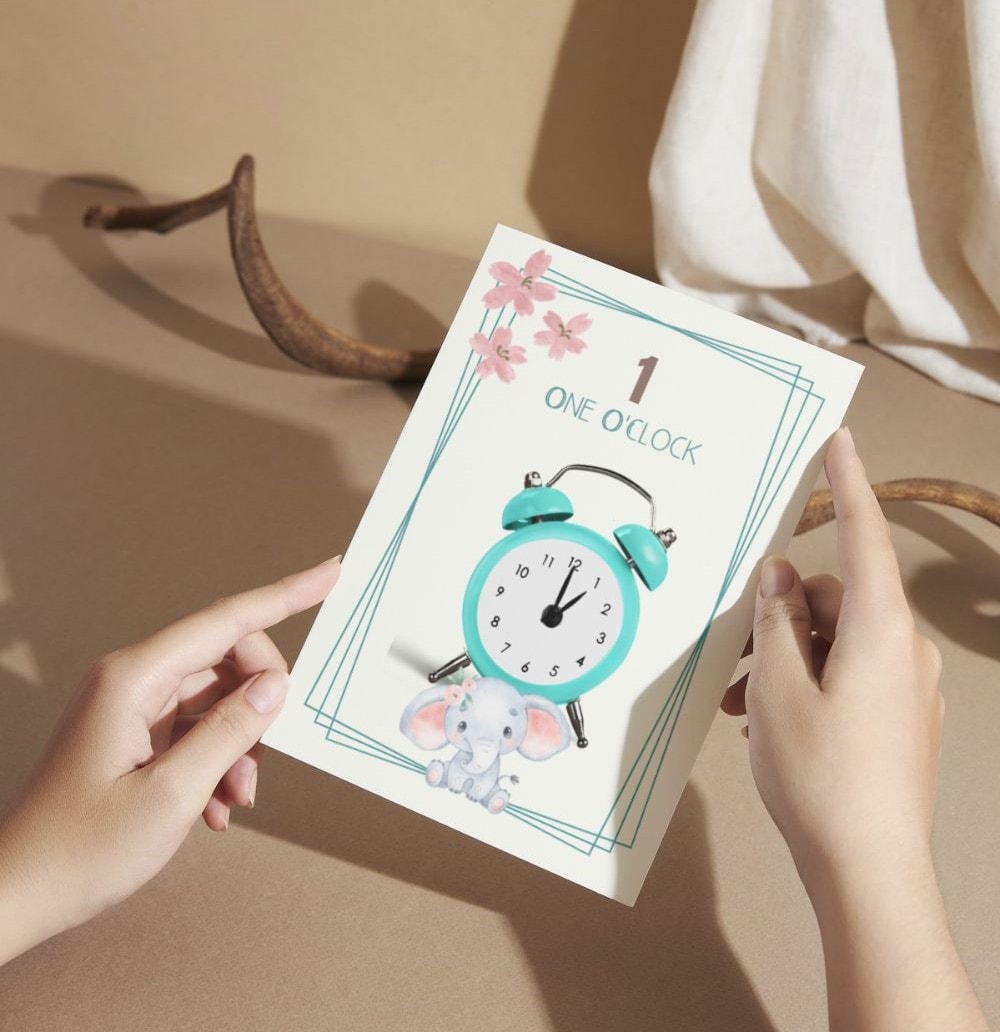
Bright, Clear Illustrations: Easy-to-read visuals that enhance recognition and understanding.
Progressive Learning: Cards introduce basic concepts like o’clock times and gradually build to more complex ideas such as quarter past and half past.
Dyslexia-Friendly Design: Simplified visuals and easy-to-read fonts ensure accessibility for children with learning challenges.
If you’re interested in using flashcards with your children but you don't have the time to make them yourself, check out Elly and Friends learning time flashcards at our store for a shortcut.

Check these out